
284/57 Ly Thuong Kiet, 14 Ward, District 14, HCM City, Vietnam

284/57 Ly Thuong Kiet, 14 Ward, District 14, HCM City, Vietnam

8:30 am - 5:30 pm

27 Jan. 2026
Why Choosing a Construction Contractor is the Most Important Step?
In the process of building a house, selecting a contractor is a decisive factor for the quality of the project, investment costs, and long-term peace of mind.
In reality, most risks when building a house, such as cost overruns, poor quality construction, delayed schedules, and contract disputes, stem from choosing the wrong contractor.
Therefore, homeowners need to clearly understand the important criteria before signing a construction contract.
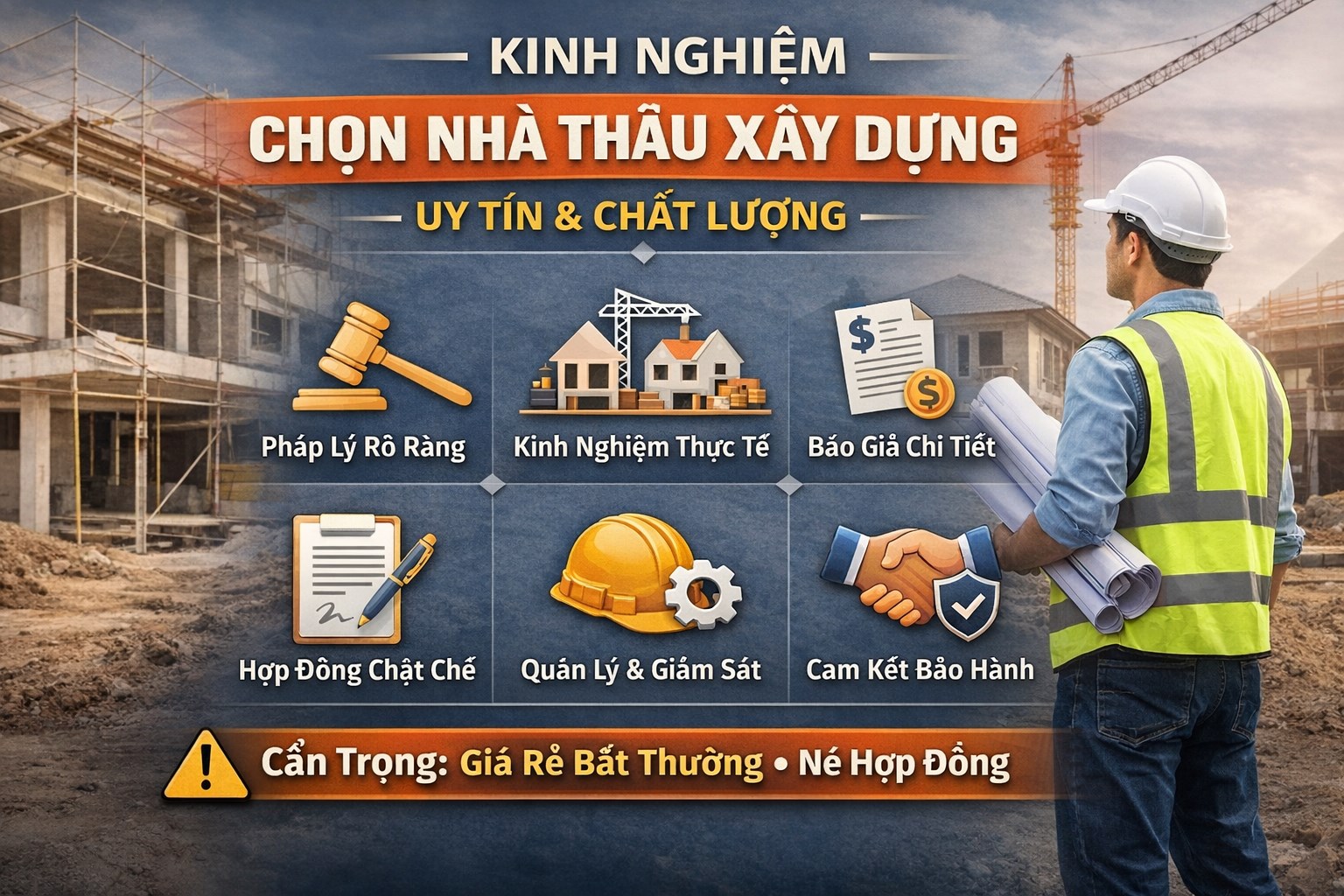
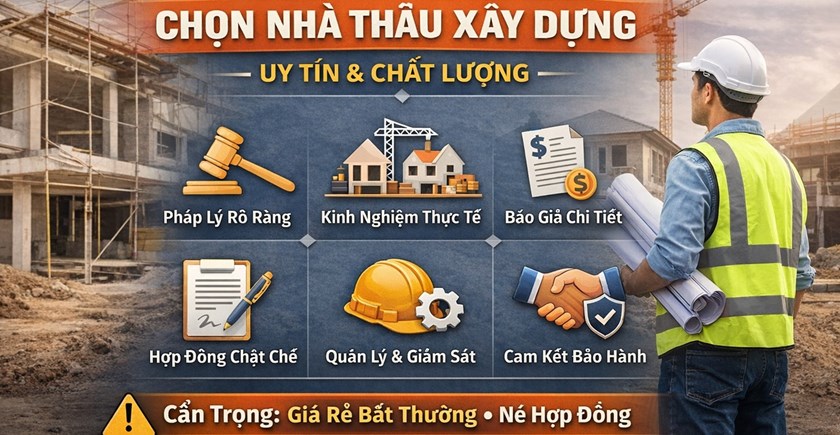
1. Verify Legal Standing and Contractor Qualifications
A reputable contractor should have:
A legitimate business license, operating in the correct construction industry
A clear office address and transparent information
Full legal entity status to bear legal responsibility
👉 This is the basis for protecting the homeowner's rights throughout the construction process and subsequent warranty period.
2. Evaluate Experience and Actual Projects
When choosing a construction contractor, do not just listen to introductions:
Prioritize contractors who have executed projects of similar scale, structure, and segment
Possess actual project photos and portfolios, not just 3D renderings
Be able to visit projects currently under construction or already handed over
👉 Practical experience is the clearest reflection of a contractor's capability.
3. Detailed Quotation – Avoid Ambiguous Costs
A standard quotation should:
Clearly list each item: rough construction, finishing, labor
Specify material types, brands, and technical standards
Avoid generic phrases such as "equivalent materials" or "as per actual conditions"
Avoid cheap but undetailed quotations, as they often harbor risks of price increases and cost overruns during construction.
4. Construction Contract Must Be Rigorous
The contract is an indispensable factor when selecting a contractor:
Clearly define progress, payment milestones, and completion time
Include penalty clauses for delayed progress, incorrect materials, or design errors
Outline how to handle cost overruns beyond the contract
👉 The clearer the contract, the lower the risk of disputes.
5. Project Management and Supervision Capability
A quality project depends not only on the workers, but also on:
A team of engineers and site supervisors who closely monitor actual progress
Clear construction management processes and progress reporting
Control over materials, technical aspects, and occupational safety
👉 A contractor with a good management system will help ensure the project is on schedule and meets quality standards.
6. Warranty and After-Sales Commitment Post-Construction
Homeowners should pay attention to:
Warranty period for structure, waterproofing, and finishes
Warranty content clearly stated in the contract
A team available to handle issues after handover
👉 A contractor's reputation is best demonstrated after the project is completed.
For more information on turnkey contractors, please visit: https://www.facebook.com/kgmvietnam/.

